Why Software Scalability Should Be Planned Before Development Begins
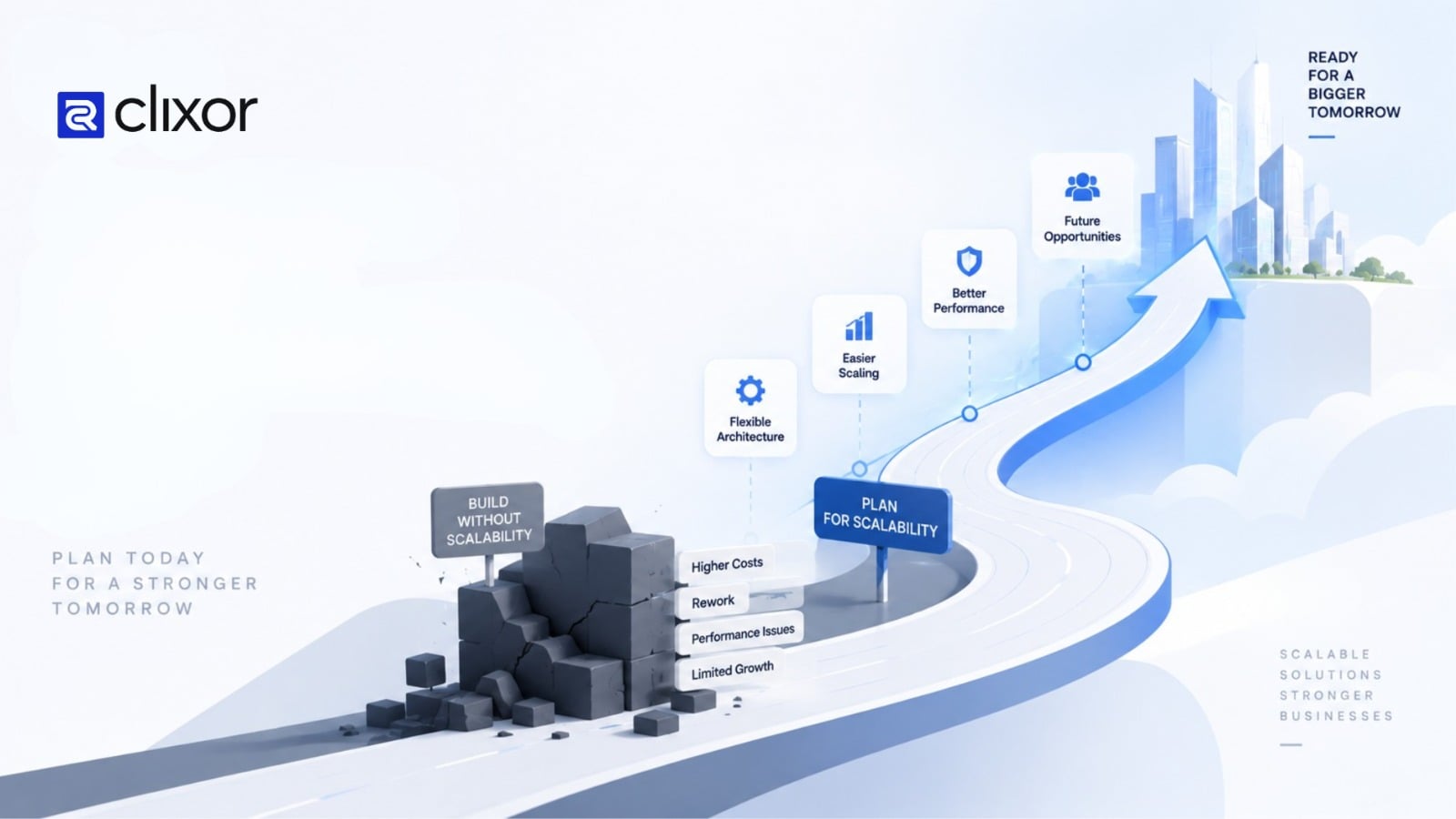
Building software is not only about making an application work today. Developers also need to consider what could happen when the number of users, data, transactions, and business requirements increase. This is where software scalability becomes an important part of development planning.
An application that works well with a small workload may struggle when demand grows. If scalability is considered only after performance problems appear, fixing the underlying architecture can become harder and more expensive. Planning for scalability early gives development teams a better foundation for future growth.
What Is Software Scalability?
Software scalability is an application or system's ability to handle increasing workloads while maintaining acceptable performance and reliability.
Growth can come from more users, larger amounts of data, more transactions, or additional business features. A scalable application is designed so that it can adapt to these changes without requiring a complete rebuild.
Why Plan Scalability Before Development?
Architecture Decisions Affect Future Growth
The architecture selected at the beginning can have a major impact on how easily an application can scale.
Developers need to consider how different components communicate, how workloads will be distributed, and which parts of the system may require additional resources later.
For example, an application designed with clear modules can be easier to expand than one where every function is tightly connected.
Databases Need Early Planning
Database design is another important part of software scalability planning.
As data grows, inefficient queries, poor indexing, or unsuitable data structures can create performance problems. Developers should consider expected data growth and access patterns when designing the database.
A simple database structure may work for a small application but require significant optimization when the system handles millions of records.
Scalability Can Influence Technology Choices
The technologies selected for an application should match its expected requirements.
Programming languages, frameworks, databases, APIs, hosting environments, and third-party services can all affect application performance and scalability.
This does not mean developers should always choose the most complex technology. The goal is to select technologies that are appropriate for the application's current needs while allowing reasonable future growth.
Infrastructure Should Support Growth
An application may need additional computing resources as demand increases.
Cloud infrastructure can provide different options for scaling computing, storage, databases, and other services. Planning infrastructure early can make it easier to increase capacity when required.
Developers should also consider deployment processes, monitoring, backups, and resource management during the planning stage.
Performance Testing Becomes Easier
When scalability requirements are defined early, teams can create performance tests around expected workloads.
For example, an online shopping application may need to test how the system performs when many users browse products and place orders at the same time.
Testing helps developers identify bottlenecks before they affect real users.
It Reduces the Risk of Major Rework
Trying to scale an application after serious performance problems appear can require changes to the architecture, database, infrastructure, or application code.
Early planning does not eliminate every future scalability challenge, but it can reduce the need for major structural changes.
Business Growth Becomes Easier to Support
Technology should support business goals rather than become a limitation.
If a business plans to expand into new markets, add customers, introduce new features, or process more transactions, its software needs to accommodate those changes.
A well-planned scalable software architecture provides more flexibility as requirements evolve.
FAQs
What is software scalability?
Software scalability is the ability of an application to handle increasing users, data, transactions, or workloads while maintaining suitable performance.
Why should scalability be planned before development?
Early planning allows developers to make better decisions about architecture, databases, infrastructure, and performance before these choices become difficult to change.
Does every application need highly scalable architecture?
No. Scalability requirements depend on the application's expected users, workload, data, business goals, and future growth.
Can an existing application be made scalable?
Yes. Existing applications can often be optimized or redesigned to improve scalability, although the effort required depends on the application's architecture and limitations.
How does database design affect scalability?
Database structure, indexing, queries, and data access patterns can affect how efficiently an application handles increasing amounts of data and traffic.
Does cloud computing make software automatically scalable?
No. Cloud infrastructure can provide scaling options, but the application architecture and infrastructure configuration must be designed appropriately to use them effectively.
When should developers perform scalability testing?
Scalability and performance testing should be considered during development and repeated as the application and expected workload grow.
Conclusion
Software scalability should be considered before development begins because early decisions can influence architecture, databases, infrastructure, performance, and future maintenance. Planning ahead helps teams build with growth in mind and avoid costly changes later.
The objective is not to over-engineer a system for an unknown future. Instead, developers should understand expected growth and build a practical foundation that can adapt as the application develops.