How Does Database Architecture Affect Web Application Performance?
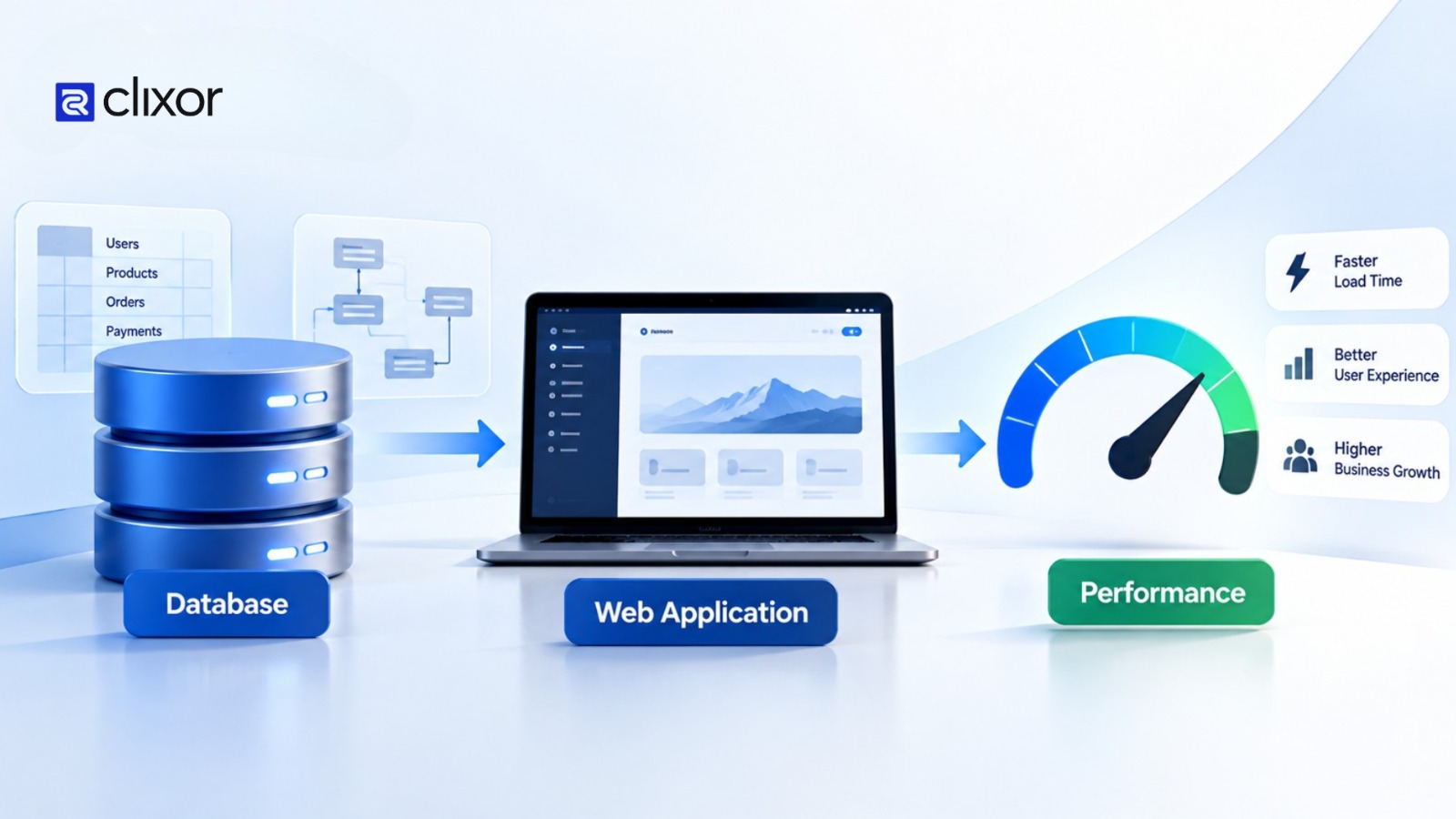
A web application can have a well-designed interface and efficient backend code, but poor database architecture can still make it slow. Every time an application loads a user profile, displays products, processes an order, or generates a report, it may need to communicate with the database.
This is why database architecture matters for web application performance. How data is structured, stored, queried, and accessed can directly affect response times, resource usage, and scalability.
What Is Database Architecture?
Database architecture describes how a database is structured and how applications interact with the data it stores.
It includes decisions about tables, relationships, indexes, queries, storage, database servers, and the way data is accessed by an application.
For example, an e-commerce application may store customers, products, orders, and payments in separate but related tables. A well-planned design allows the application to retrieve the required information efficiently.
For businesses developing database-driven applications, custom application development can allow database structures and application workflows to be planned around specific operational requirements.
How Does Database Architecture Affect Performance?
1. Data Structure Affects Query Efficiency
The way tables and relationships are designed can affect how quickly an application retrieves information.
Poorly structured data may require complicated queries or repeated processing. A properly planned database design can make common operations easier and reduce unnecessary database work.
For example, if an application frequently needs to display a customer's recent orders, the database should be structured so that this information can be retrieved efficiently.
Database design principles are also discussed in the MySQL 8.4 Reference Manual for developers working with relational database systems.
2. Indexing Can Improve Data Retrieval
Indexes help databases locate records without scanning every row in a table.
For frequently searched fields such as customer IDs, email addresses, product IDs, or order numbers, appropriate database indexing can improve query performance.
However, indexes also require storage and can add overhead when data is inserted or updated. Therefore, indexing should be based on actual query patterns rather than adding indexes to every column.
For applications that require database-backed APIs and connected services, API development and integration can also be planned around efficient data access and communication between application components.
PostgreSQL provides detailed documentation on indexes and index types, including how indexes can improve data retrieval.
3. Query Design Matters
Even a well-designed database can perform poorly when queries are inefficient.
SQL query optimization involves examining how queries retrieve data and reducing unnecessary operations.
For example, selecting only the required columns instead of retrieving an entire table can reduce the amount of data transferred and processed.
Database systems provide tools for analysing query execution. MySQL, for example, documents the use of EXPLAIN to understand query execution plans.
4. Database Architecture Must Support Growth
A small application may work efficiently with a limited amount of data. As users and transactions increase, the database may face greater demand.
A scalable database architecture considers future growth and may use techniques such as caching, read replicas, partitioning, or database scaling when appropriate.
The right approach depends on the application's workload and technical requirements.
For applications that need infrastructure capable of adapting to increasing workloads, cloud solutions can be considered as part of the broader application architecture.
AWS also provides guidance on scaling relational databases and approaches for handling increasing database workloads.
5. Database and Application Communication
Performance is not determined by the database alone. The application and database constantly communicate through requests.
If an application makes unnecessary database calls, response times can increase.
For example, loading information for 100 products with separate database requests can be less efficient than retrieving the required information through an appropriately designed query.
This is why application architecture, database access patterns, and backend implementation need to be considered together when improving performance.
How Can Businesses Improve Database Performance?
Businesses and development teams can improve database performance by:
Reviewing slow queries
Adding appropriate indexes
Avoiding unnecessary database requests
Designing efficient table relationships
Monitoring database resource usage
Using caching where appropriate
Planning for future data growth
Regularly reviewing database performance.
Database optimization should be based on actual application behavior rather than assumptions.
FAQs
1. Why is database architecture important for web applications?
It determines how efficiently an application stores, retrieves, and processes data, which can directly affect application response times.
2. Does database indexing always improve performance?
No. Indexes can improve read performance for suitable queries, but excessive indexing can increase storage requirements and affect write operations.
3. What is database optimization?
Database optimization is the process of improving database structure, queries, indexes, and resource usage to make data operations more efficient.
4. Can a database slow down an entire web application?
Yes. Slow queries, excessive database requests, connection issues, or inefficient database design can contribute to slower application responses.
5. How often should database performance be reviewed?
Performance should be monitored regularly, especially after major changes in application usage, data volume, queries, or infrastructure.
Conclusion
In conclusion, database architecture is an important part of web application performance. Efficient data structures, suitable indexes, optimized queries, and an architecture that can handle future growth can help applications work more efficiently.
Database performance should also be considered alongside backend code, server resources, network communication, and application architecture. A balanced approach helps development teams identify the actual source of performance issues instead of focusing on the database alone.